Cancer Commons Observational Study
CCCS001

Methods of Identifying Effective Off-Guideline Treatments for Advanced Cancer Patients


Cancer Commons Study CCCS001 uses advanced diagnostic tests to identify FDA-approved drugs that could work for your specific cancer, even drugs not in current treatment guidelines. This is a site-less study: no travel required.
Study Type
Observational
Your oncologist directs all treatment decisions
Cancer Types
All Cancers
All cancer types eligible
Cost
No Cost
No charge for Cancer Commons scientific analysis
Location
Anywhere
Participate from anywhere with your own oncologist
Principal Investigators
Clifford Reid, PhD
Prajit Pillai, PhD

Cancer Commons
Sponsor
Cancer Commons
Cancer Commons is a 501(c)(3) nonprofit

You may be eligible if you have advanced cancer and have exhausted standard guideline treatments.

This site-less study is designed for patients who need options beyond what current treatment guidelines offer and aren't ready to stop fighting. You participate with your own oncologist, wherever you are.

Registry: ClinicalTrials.gov NCT07343024
You may qualify if
You have been diagnosed with any type of cancer
Standard guideline treatments (NCCN) are no longer working or are unavailable
You are proceeding onto therapy for treatment
You have results from a genomic or other treatment selection test (or are willing to get one)
Your oncologist is willing to consider off-guideline treatment options
You may not qualify if
No promising off-guideline drugs identified by the treatment selection test
Oncologist unwilling to administer the identified off-guideline drugs
No approved method of paying for the off-guideline drugs

How It Works

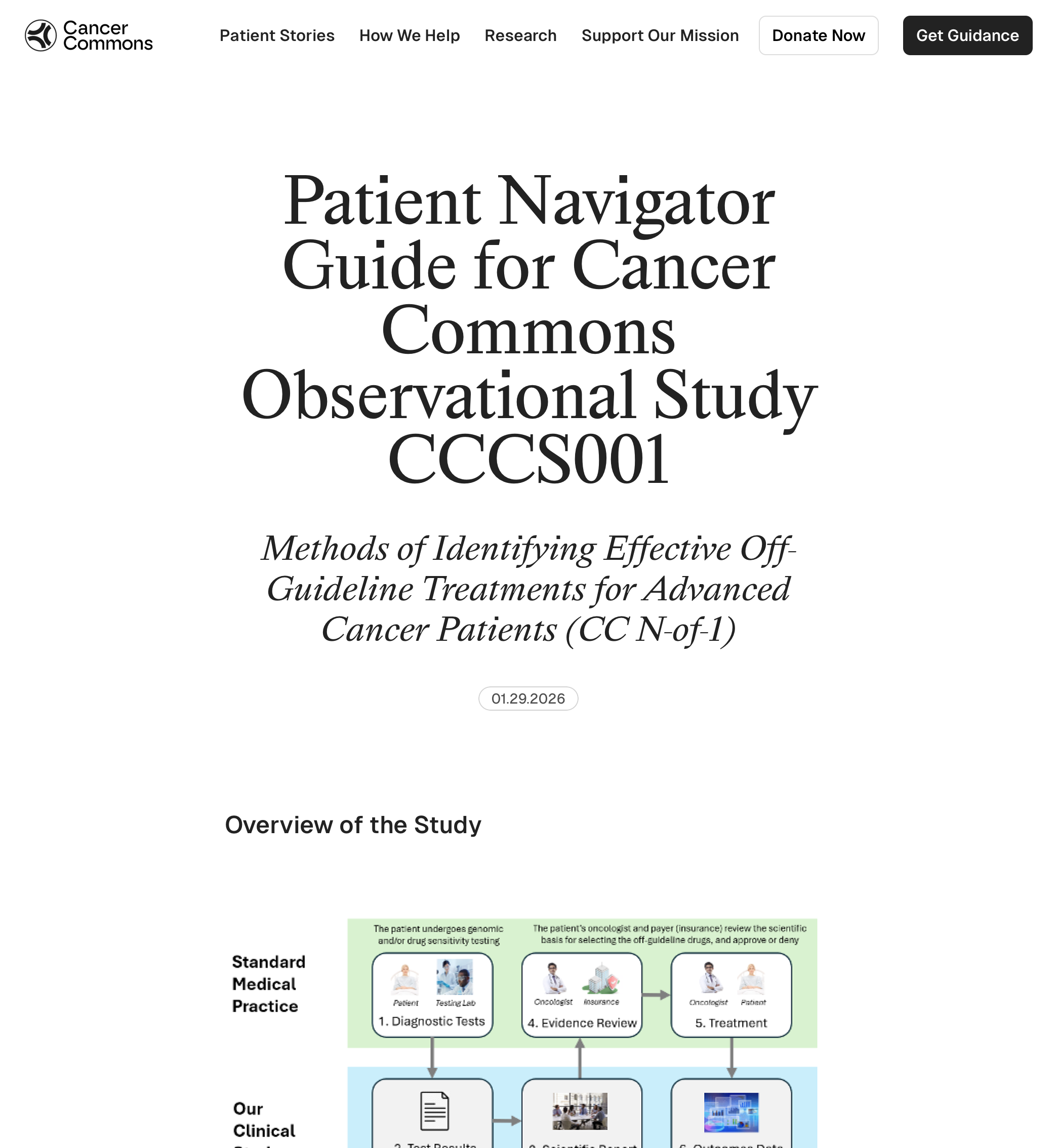
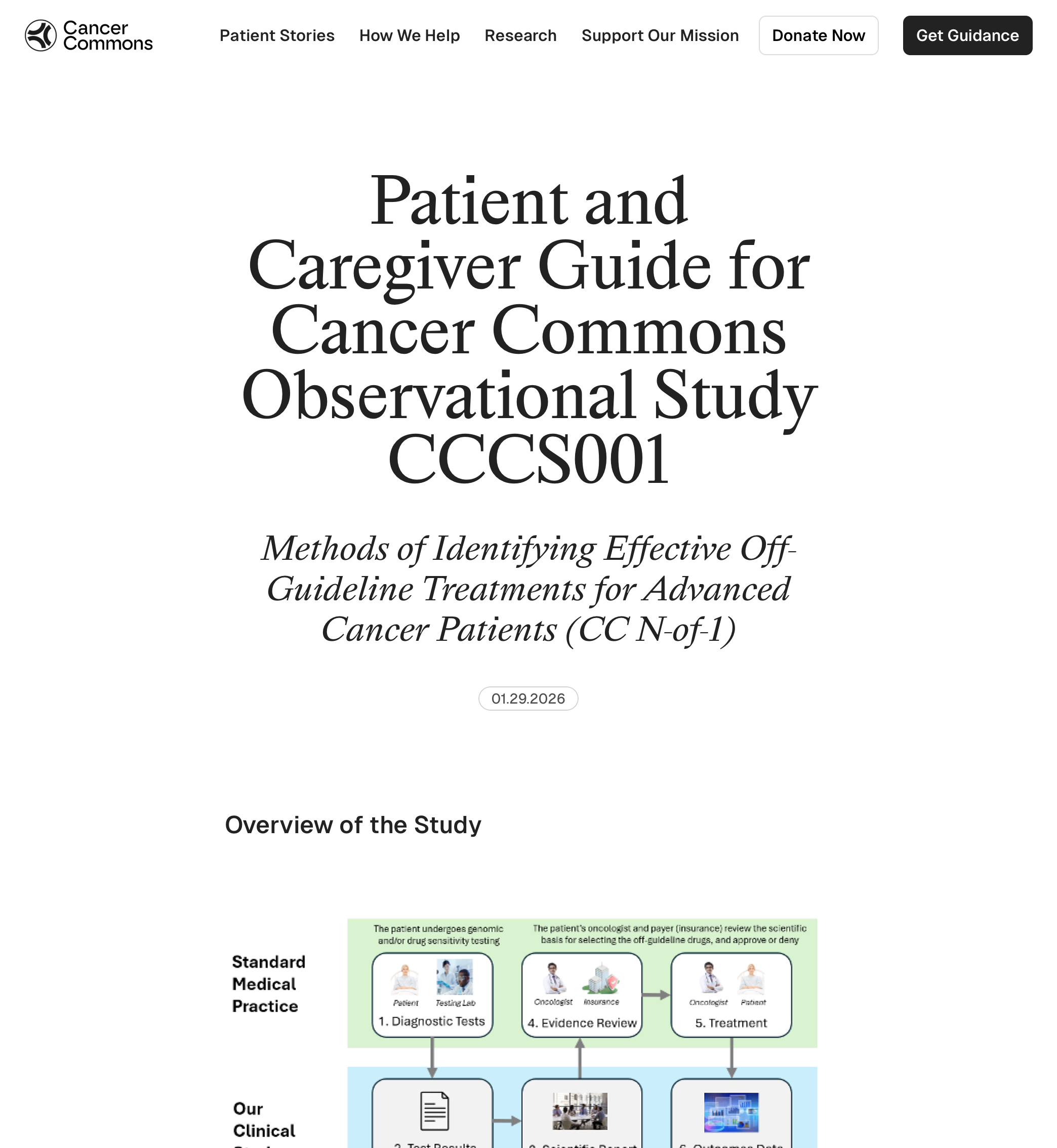
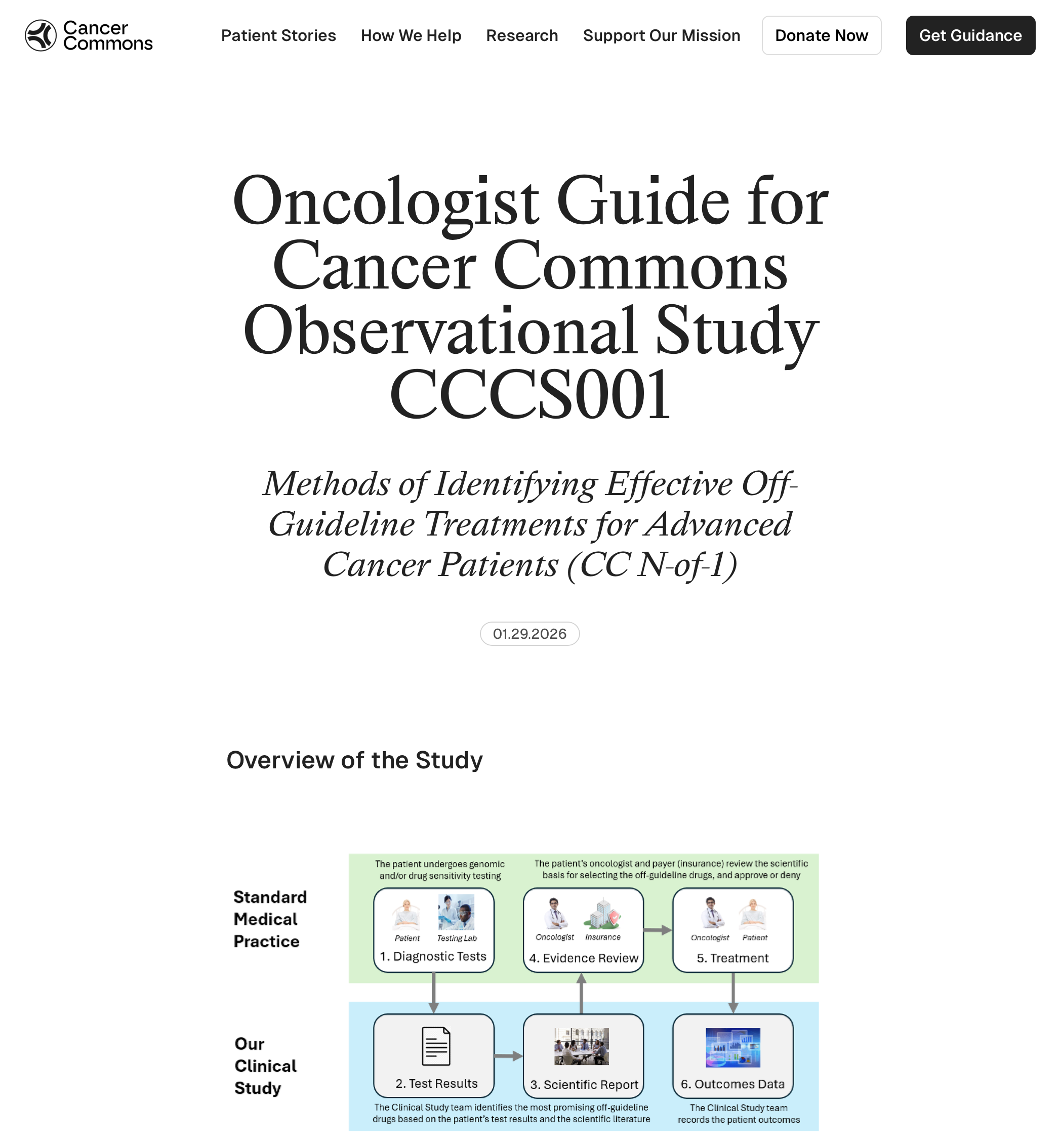
1. Diagnostic Testing
You complete one or more Drug Sensitivity Tests (DSTs). These tests expose your live cancer cells to 300+ FDA-approved drugs to identify which ones may be effective against your specific cancer.
2. Scientific Analysis
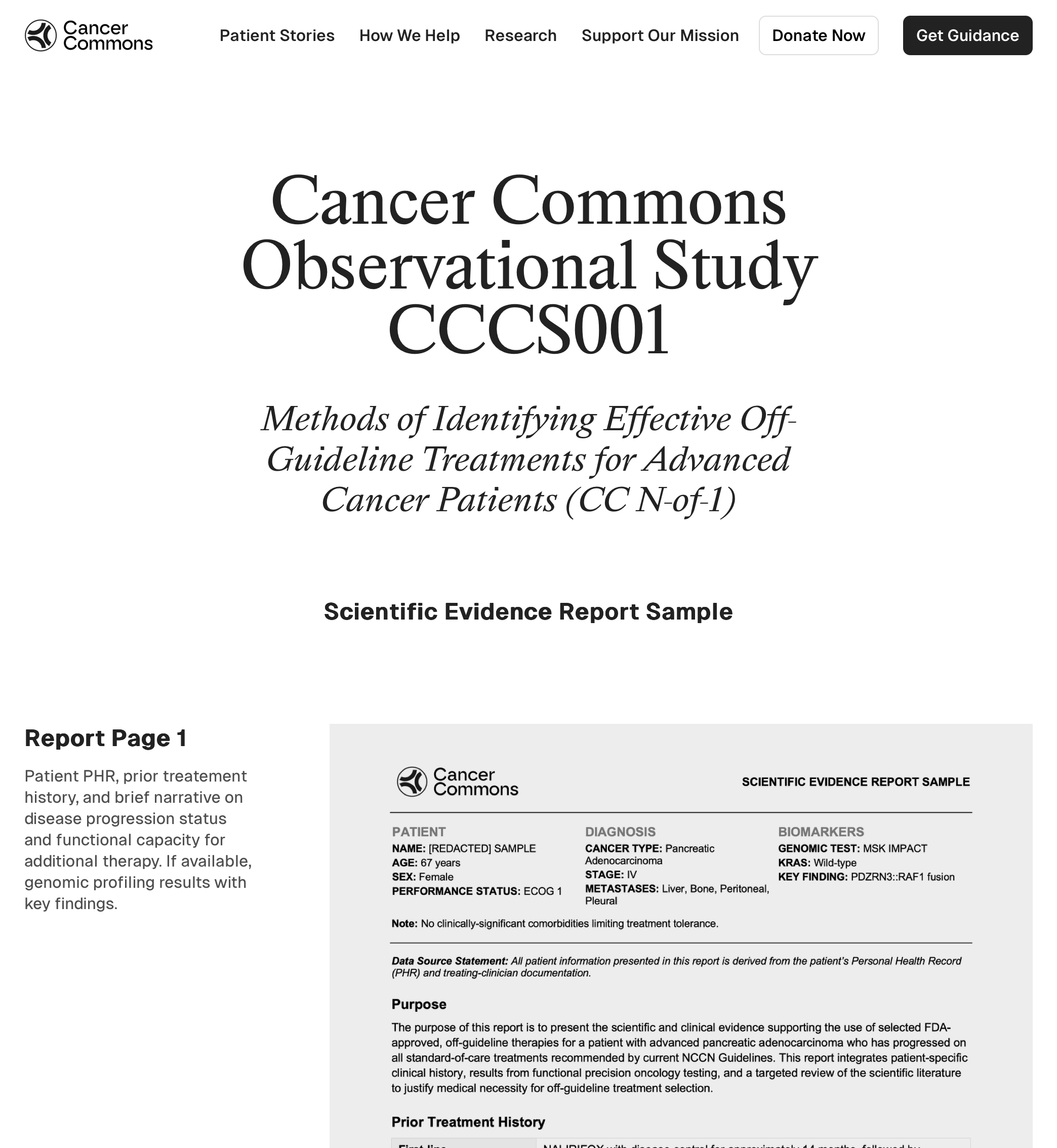
Cancer Commons PhD scientists analyze your test results alongside the latest published research. They produce a detailed Scientific Evidence Report identifying the most promising off-guideline drugs for your tumor.
3. Enrollment
With your informed consent, you are enrolled in the study remotely, from wherever you are. There is no trial site to visit. Your oncologist reviews the list of promising drugs and decides whether to proceed with treatment.
4. Treatment
Your oncologist administers the selected FDA-approved drug or drug combination. All treatment decisions remain solely with your treating physician.
5. Outcomes Tracking
Your response is recorded to build evidence for which tests and treatments work best, helping you and future patients with advanced cancer.
Frequently Asked Questions
Do you still have questions?
Contact Us
What does "off-guideline" mean?
Plus icon
The NCCN (National Comprehensive Cancer Network) publishes treatment guidelines listing drugs recommended for each cancer type. These guidelines cover roughly 10% of the 300+ FDA-approved cancer drugs. The other 90% are "off-guideline," which means approved by the FDA for other cancers but not yet studied or listed for yours. Drug Sensitivity Tests can identify which of these drugs may work for your specific tumor.
What is a Drug Sensitivity Test?
Plus icon
Drug Sensitivity Tests (DSTs) take a sample of your live cancer cells and expose them to hundreds of FDA-approved drugs in a laboratory setting. Using advanced imaging and AI analysis, the tests identify which specific drugs are most likely to be effective against your cancer. This allows your oncologist to select treatments based on your tumor's actual response, rather than population averages from clinical trials.
Will my insurance cover the treatment?
Plus icon
Because the drugs identified are already FDA-approved, many insurers will cover them, especially with the Scientific Evidence Report Cancer Commons provides. Prior authorization, compassionate use programs, and other payment pathways are explored for each patient. The study team works with you and your oncologist to navigate coverage.
Does Cancer Commons replace my oncologist?
Plus icon
No. Your oncologist makes every treatment decision. Cancer Commons provides expert scientific analysis, identifying potentially effective drugs and assembling the published evidence that supports their use. Think of it as giving your oncologist additional, deeply researched options to consider.
Is there any cost to participate?
Plus icon
Cancer Commons provides its scientific analysis at no charge. Costs may be associated with the Drug Sensitivity Test itself (which varies by test provider) and with the treatment drugs (covered through insurance, compassionate use, or other pathways). The study team will discuss all potential costs with you upfront.
What does site-less mean?
Plus icon
Most clinical trials require you to travel to a designated research hospital or trial site, sometimes across the country. This study has no physical trial site. You participate wherever you are, with your own oncologist. Cancer Commons conducts its scientific analysis remotely. Your tissue sample is sent to a Drug Sensitivity Test lab by mail. All coordination happens by phone and email. You never need to leave your treatment center.
How is this different from a Clinical Trial?
Plus icon
Clinical trials test unproven experimental drugs and typically require travel to a trial site, randomization, and sometimes placebos. This is a site-less observational study using FDA-approved drugs that have already passed safety testing. You stay with your own oncologist. You are not randomized. There is no placebo. Your oncologist chooses your treatment. The study observes and records outcomes to determine which diagnostic tests best predict drug effectiveness.

Resources for Oncologists

Resources for Patients

Resources for Patient Navigators

Patient Navigator Guide

Lead Clinical Research Nurse: Unsha Bakker